
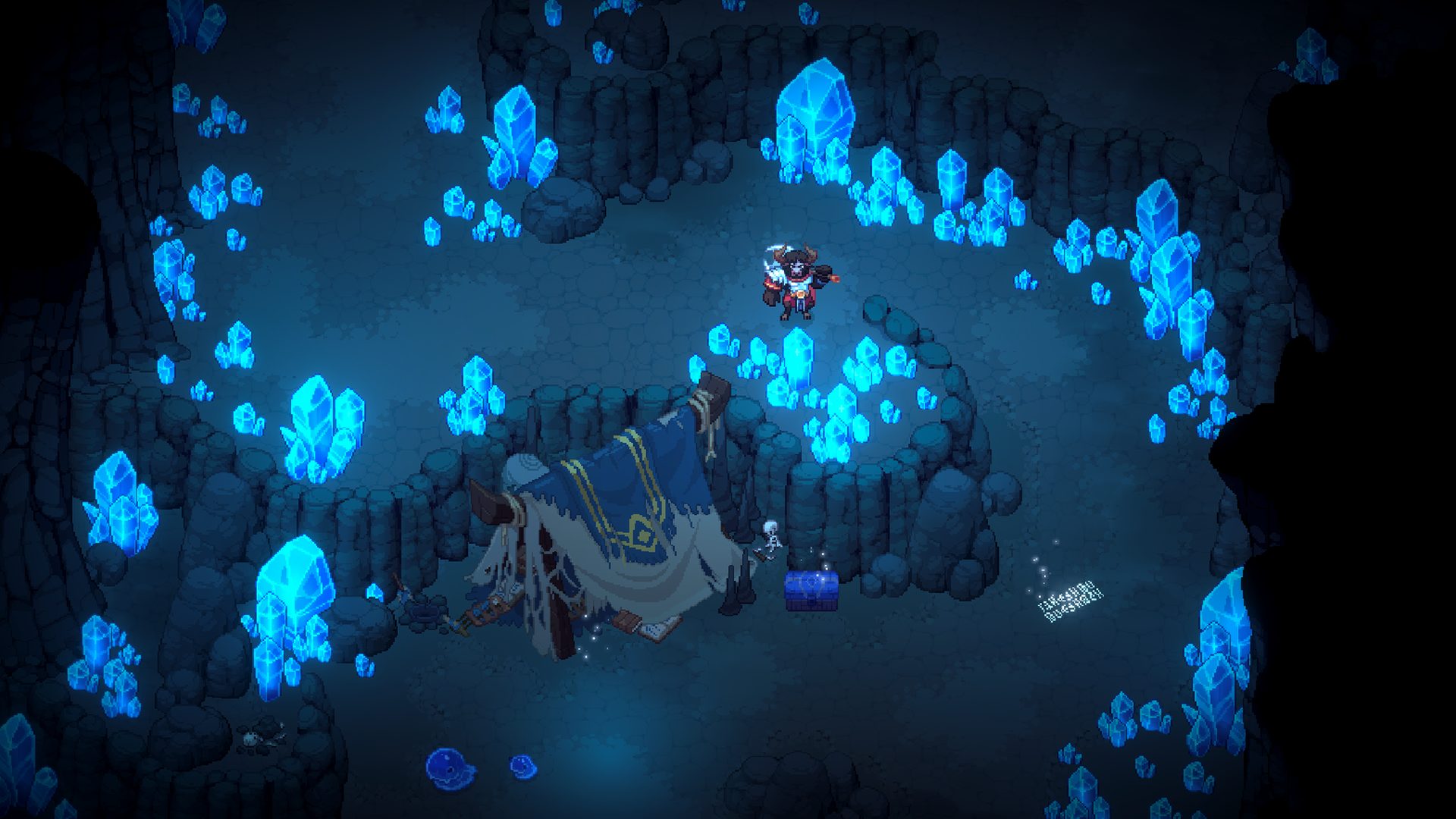
Dimraeth Crafting & Base Building: Recipes, Food Buffs, First Builds
Dimraeth recipes unlock by exploring or experimenting, and food grants roughly 30-minute buffs. What to build first, and why equipment crafting is not in yet.

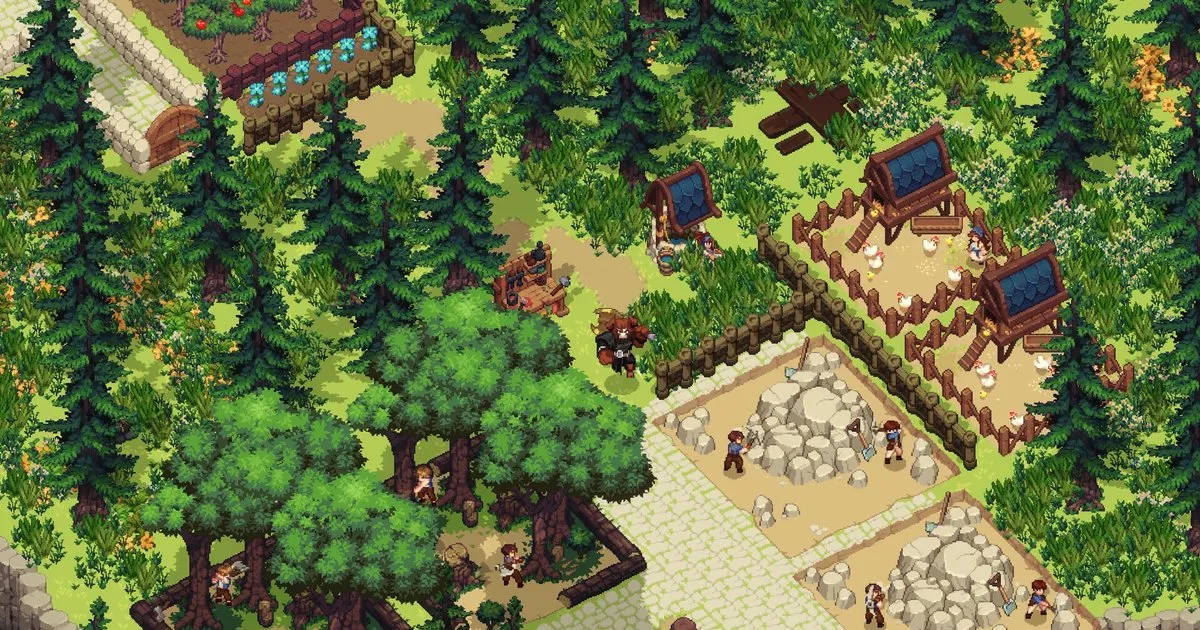
Crafting in Dimraeth is not a gather-and-click loop: you either find recipes in the world or discover them by dropping materials into the crafting slots, where a valid combination both makes the item and permanently unlocks the recipe. The first things worth investing in are farm plots and crafting stations — plots turn raw materials into a steady supply, and stations decide what you can produce at all. Everything below comes from Mudtek’s dedicated crafting and building design talk, the most detailed first-party explanation of these systems.
How recipe discovery works
The developer describes two explicit routes:
- Found in the world. Recipes exist as items to pick up, and picking one up unlocks it.
- Discovered by experimenting. In the crafting tab you place items into slots. If the inputs match a valid recipe you craft the item and unlock the recipe in the same action. Once unlocked you can craft it straight from the recipe list instead of re-deriving the combination.
That is designed to serve both kinds of player: the explorer who hunts recipes across the map, and the tinkerer who likes testing ingredients at the bench.
The Crafting Codex is the hint system. It shows how many undiscovered recipes a given material is involved in. The developer’s own example is tender berries: if they still have undiscovered recipes attached, there is more you can do with them than your current potion line. For completionists it is a light set of breadcrumbs and a progress tracker.
You can craft from your backpack or from dedicated stations, and many recipes require a specific station. Building another station therefore means unlocking another batch of products.
What each product category solves
| Category | Role | Key mechanics | When to use it |
|---|---|---|---|
| Food | Long-duration baseline power | Timed percentage buffs, roughly 30 minutes on average: max health, concentration, stamina, regeneration, elemental resistances | Before heading out, before a boss |
| Potions | Burst sustain and burst buffs | Restore health, concentration and stamina in combat; some can be thrown to teammates; some grant about a minute of extra damage | High-pressure fights, rescuing a teammate, burst windows |
| Cures | Status clearing | Clear heavy bleed or poison buildup before it snowballs | Against enemies that stack those effects |
| Throwables | Patching weaknesses | Throwable knives and elemental flasks add ranged pressure, area damage or a status you lack | When your build is missing a damage type |
| Spellbooks | Long-term build investment | Crafted at your stronghold by NPCs from monster and boss materials; the spell usually mirrors that creature | As the main story advances |
The one loop worth memorising is the developer’s: scout the boss damage type → check your Crafting Codex at home → cook for the right resistance or stat breakpoint → eat, restock, head back. The developer is explicit that this does not make a fight easy; it gives you room to actually play the mechanics instead of losing the run to one mistake.
The stronghold: production first, decoration later
The design talk does not hand out a beginner build order, but it does spell out the dependencies. Working in this order saves the most rework:
- Basic crafting station. Without it most recipes simply cannot be made.
- Farm plots. Plant seeds, wait, harvest. The developer calls farming one of the core tools for sustained production: a steady potion supply needs a steady ingredient supply.
- Wells and animal or monster pens. These provide a reliable stream of basic resources so you stop making trips for low-tier materials.
- A second station type and storage. This widens what you can produce and fixes how much you can carry.
- Decoration. Furniture, wall decorations, rugs and lighting. Officially purely optional: build a production hub or a cosy home, it does not change output.
The daily rhythm is: return to base, restock, queue what the next trip needs, and expand gradually. The stronghold is the backbone of your out-of-combat progression, not a one-off task.
Equipment crafting does not exist yet
This deserves its own section because people go looking for the menu. The developer states plainly that equipment crafting is not in the game yet. It is planned for later in Early Access as an end-game min-max tool: once you unlock certain item sets you can craft them repeatedly fishing for ideal stat baselines. The developer also stresses that monster drops remain the primary gear path for most of the game, so equipment crafting is a supplement and optimiser, not a replacement.
In the current build, gear comes from drops and vendors. Do not burn resources waiting for a system that has not shipped.
What if you do not want to craft at all
You can skip it. The developer positions crafting and building as impactful but not essential:
- Most, if not all, essential items can be bought from NPCs at a premium;
- You may get them later than if you made them yourself;
- But you are never hard-blocked — there are multiple paths to power including gear progression, levelling and exploration.
In other words, crafting changes your timing, consistency and convenience, not whether you can finish the game.
Planning a stronghold for co-op
The rule that matters comes from the store page: level, equipment, inventory, spells and personal progression travel between worlds, while story progress, recruited allies and buildings stay tied to each world. Two practical consequences:
- Shared builds belong on whoever owns the world. Do not bank everyone’s production on a save you might switch away from.
- Everyone maintains a personal supply line. Food and potions travel with you, and throwable potions turn “heal a teammate” into a concrete action.
What the developer has not said
- The full recipe and building lists are unpublished, so no recipe names are listed here (tender berries is the developer’s own example when explaining the Codex).
- Equipment crafting only has a “later in Early Access” window.
- Farm cycle length, plot caps and pen output rates are all unannounced.
- The build order above is assembled from the dependencies the developer described, not from an official checklist.
Sources: Mudtek’s Steam announcement “Prepare, Restock, Push Further: Dimraeth’s Crafting and Building Systems” (early 2026), the Steam store page sections “Adventure, Then Return Home” and the Early Access Q&A, and the 2026-09-02 Early Access content announcement. Checked 2026-09-14.