
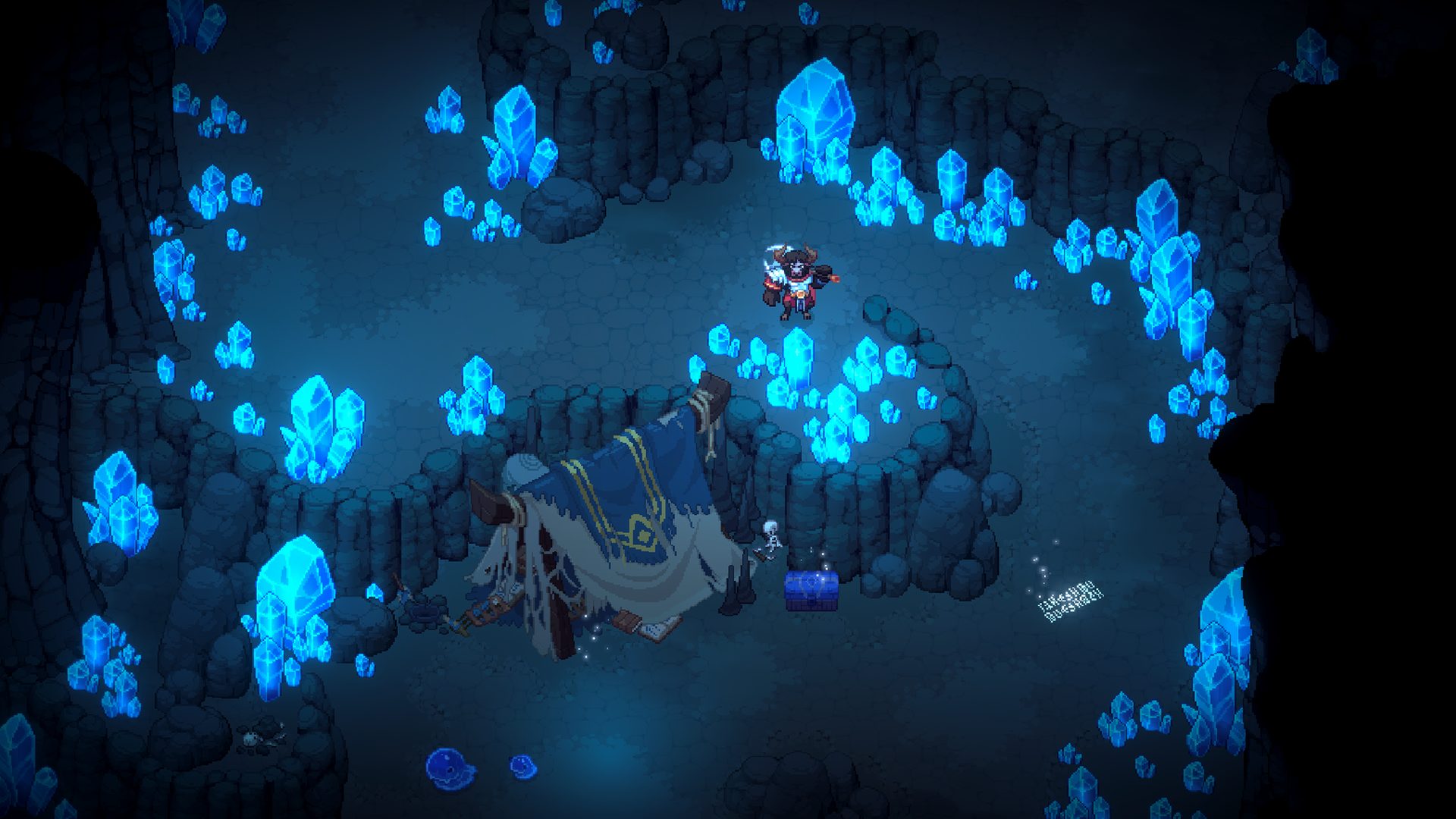
Dimraeth Gameplay Explained: Stamina Combat, Spells, 8-Player Co-op
How the Dimraeth gameplay loop fits together: Souls-lite stamina combat, five spell slots, food and potion preparation, base production, and co-op rules.

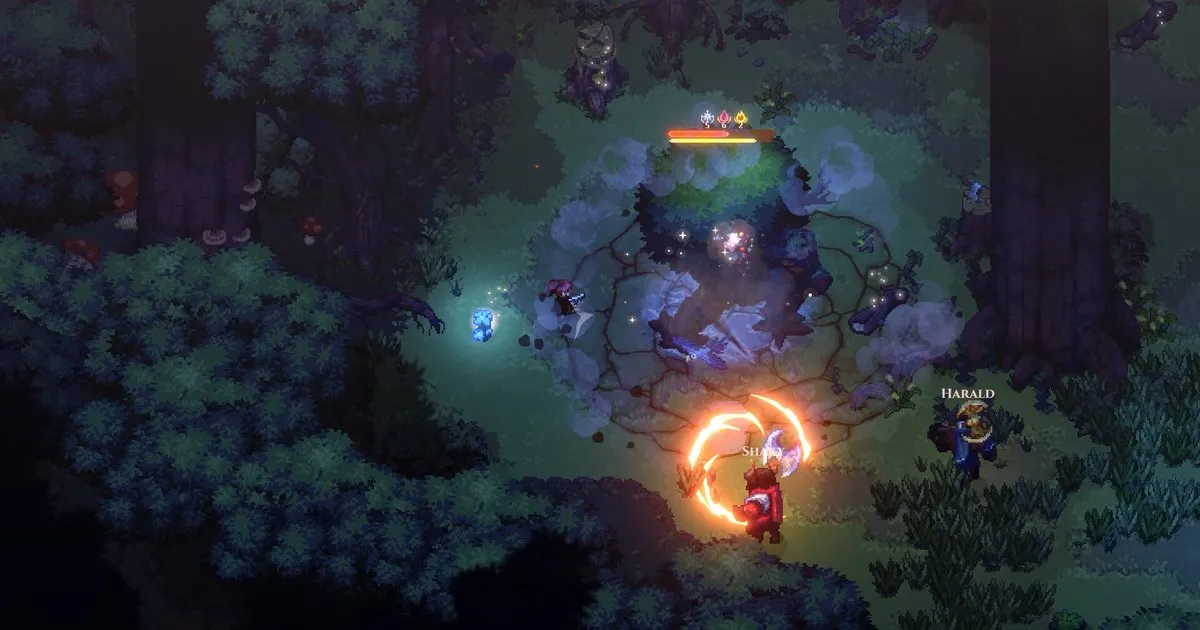
Dimraeth’s gameplay loop compresses into one sentence: head out to explore, fight and finish quests, gather resources, come home to cook and brew, then take those buffs into harder content. Three design choices separate it from a standard action RPG. Every attack spends stamina, so swinging is a commitment. A large share of your spells comes from spellbooks crafted from monster materials, and each spell has an attribute requirement you must meet. And personal progression follows your character while story progress, allies and buildings stay tied to a world, so you never accidentally finish a friend’s campaign. If you are starting fresh, stabilise the stamina rhythm before optimising a build — it pays off faster than gear.
Every attack is a commitment
The store page describes combat as “Every Attack Is a Commitment”: manage stamina, read enemy telegraphs, position yourself, then decide whether this moment is a strike, a dodge, a block or a parry. Fights are usually decided by what you choose during an enemy wind-up rather than by a stat gap.
In practice:
- Chaining attacks drains stamina, and without stamina you cannot dodge. The reliable rhythm is attack twice, step back, watch.
- Blocking and parrying carry different risk: blocking costs stamina but forgives more, while a parry pays better with a tighter window.
- Enemies telegraph their attacks. Learn the tells before you optimise damage.
Spells: five slots, three sources, one attribute gate
Three constraints matter at the same time.
- You can equip five spells. It is a loadout decision, not a collection.
- Spells come from three places: your race, your class, and spellbooks crafted from monster and boss materials that grant universal magic.
- Every spell has attribute requirements. If you do not meet them you cannot equip it, which is why spreading attributes evenly is a mistake.
The store page advertises more than 300 spells in total, but that is a marketing figure — it does not mean all of them are reachable at launch. Spellbooks come from your stronghold: combine an NPC you have recruited with materials from monsters and bosses, and the resulting spell usually mirrors that creature’s ability. The further you push the story, the larger the spell pool you can choose from.
How gathering, crafting and the stronghold feed each other
The causal chain is clear, and understanding it tells you where resources belong:
Exploration yields recipes and materials → gathering and farming secure the base supply → crafting stations turn materials into food, potions and tools → you take those buffs into boss fights → boss materials become spellbooks at your stronghold → spells strengthen your build → you can push into new regions.
Food and potions do different jobs:
- Food is the long baseline: percentage buffs lasting around 30 minutes, covering max health, concentration, stamina, regeneration and elemental resistances.
- Potions are burst sustain, restoring health, concentration and stamina in the middle of a fight. Some can be thrown to a teammate as a rescue, and others grant roughly a minute of extra damage.
- Cures clear bleed and poison buildup. They add no power, but without them a high-pressure fight snowballs.
The developer’s own preparation loop is: scout the boss damage type, check your Crafting Codex at home, cook for the resistance or stat breakpoint you need, eat, restock, and head back out.
The stronghold is both production and decoration
The stronghold’s main job is keeping production running: crafting stations decide what you can make, farm plots provide steady ingredients, wells and animal or monster pens stabilise low-tier supplies, and storage decides how much you can carry out. The developer also built a full isometric tile-based building system with furniture, wall decorations, rugs and lighting, so your base can be a production hub or simply a home.
Crafting and building are officially “optional but impactful”: essentials can be bought from NPCs at a premium, and you may get them later, but you are never hard-blocked. For the full chain and a build priority order, see crafting and base building.
Solo versus eight-player co-op
| Item | Solo | Co-op (up to 8) |
|---|---|---|
| Players | One, playable from start to finish | Up to eight, seamless drop-in/drop-out |
| Networking | Local | Peer-to-peer, one player hosts |
| Dedicated servers | Not applicable | Not supported |
| Local split-screen | Not supported | Not supported |
| Progress that follows you | Level, equipment, inventory, spells, personal progression | Same, carried between worlds |
| Progress tied to a world | Story progress, recruited allies, buildings | Same, tied to each world |
Two things people get wrong. First, this is not an MMO: the official FAQ says it is designed for small groups of up to eight, and you will not see hundreds of strangers running around. Second, designs like throwable potions show that co-op has real division of labour rather than just scaling solo content for more players.
Where to start reading
- Want someone to walk you through the first evening: beginner guide.
- Want crafting and the base working first: crafting and base building.
- Undecided on a pairing: read races and classes, which cover launch scope and the current state of the skill tree.
What is still unconfirmed
The official site says forests, weather and seasons shift around you, but the developer has not published a season length, its effect on resources, or how often it changes. The skill tree is the same story: officially it is being overhauled in this cycle and nothing more. How pets, storage and stronghold locations behave across multiple worlds is also unannounced. Those details will appear here once the developer publishes them; until then there are no speculative numbers.
Sources: Steam store page “About This Game” and the Early Access Q&A (checked 2026-09-14), Mudtek’s official crafting and building design talk, the 2026-09-02 Early Access content announcement, the official FAQ, and the spell system devlog on Mudtek’s official YouTube channel. Checked 2026-09-14.